Product Sign Up
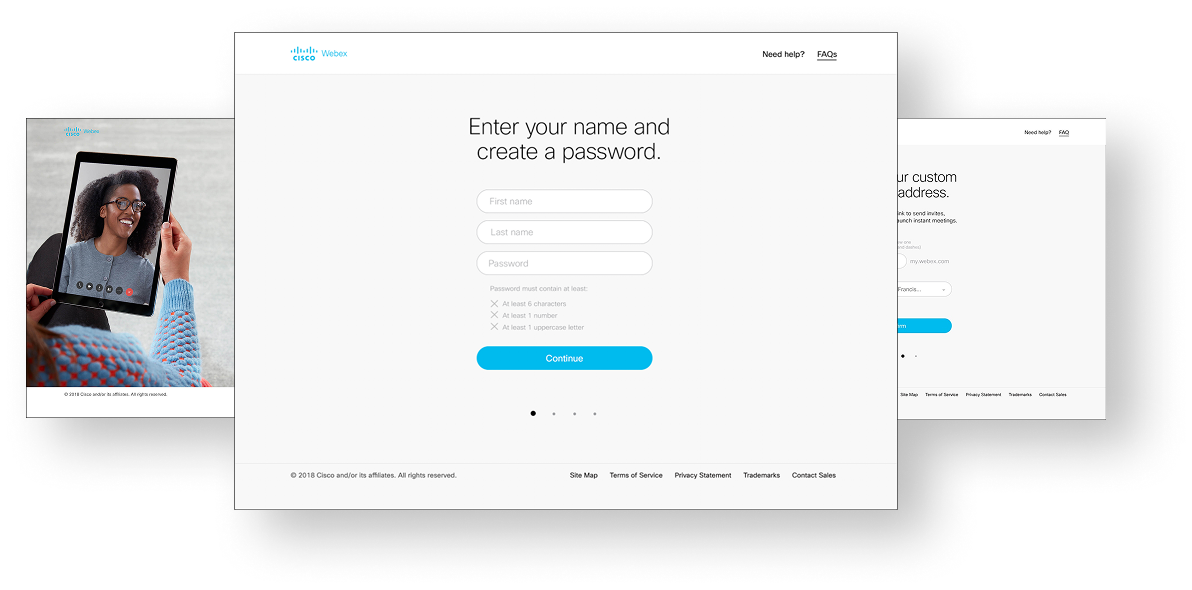
Redesigned a Cisco Webex free trial sign up with smoother navigation, clearer content and a simplified password creation step.
Impact
Project Overview
The business leadership team prioritized an effort to expand the user base. Although Webex extended their product offering at least a year before with a new chat tool, the business was not getting the traction they expected.
Lead UX Designer
Business Leads, Website Developers, Product Designers, Marketing Designers, Data Analysts
Customer Need
Users were not completing the product sign up. There was evidence that users either abandoned the first step of the product’s free trial registration or they did not activate their product account at the end of the flow. My role was to partner with business and product teams to identify the reasons why users were abandoning the sign up on the marketing website and lead the redesign of a product sign up flow.
Understand
I began the design process by examining the product sign up steps with the most abandonment. I evaluated the current flow based on best practices and competitive analysis to identify areas we could improve and propose solutions that could be tested.
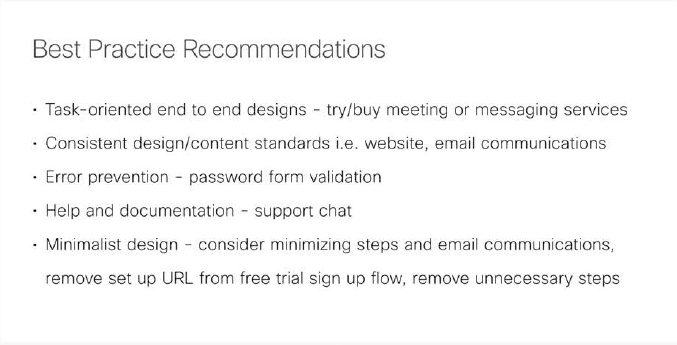
Preliminary research, including competitive analysis and best practice evaluations, confirmed that the number of sign-up steps is not always the primary reason for abandonment. This led me to believe we needed to investigate other root causes.
Research
Investigating the Root Cause
I shared my initial research findings with the product owner and team to advocate for additional resources to conduct deeper user research. We needed to understand exactly WHY users were abandoning before activating their accounts.
We needed both qualitative data to understand why issues were happening and quantitative data to understand what was happening.
A/B tests were conducted to evaluate different approaches to content and form design. One key finding showed that a landing page with a single form field performed 4% better than a page with multiple form fields on the first step.
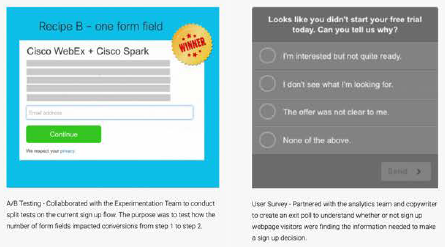
I also partnered with the analytics team to launch a website poll to understand whether users could find the information they needed to convert.
Design
Designing an End-to-End Experience
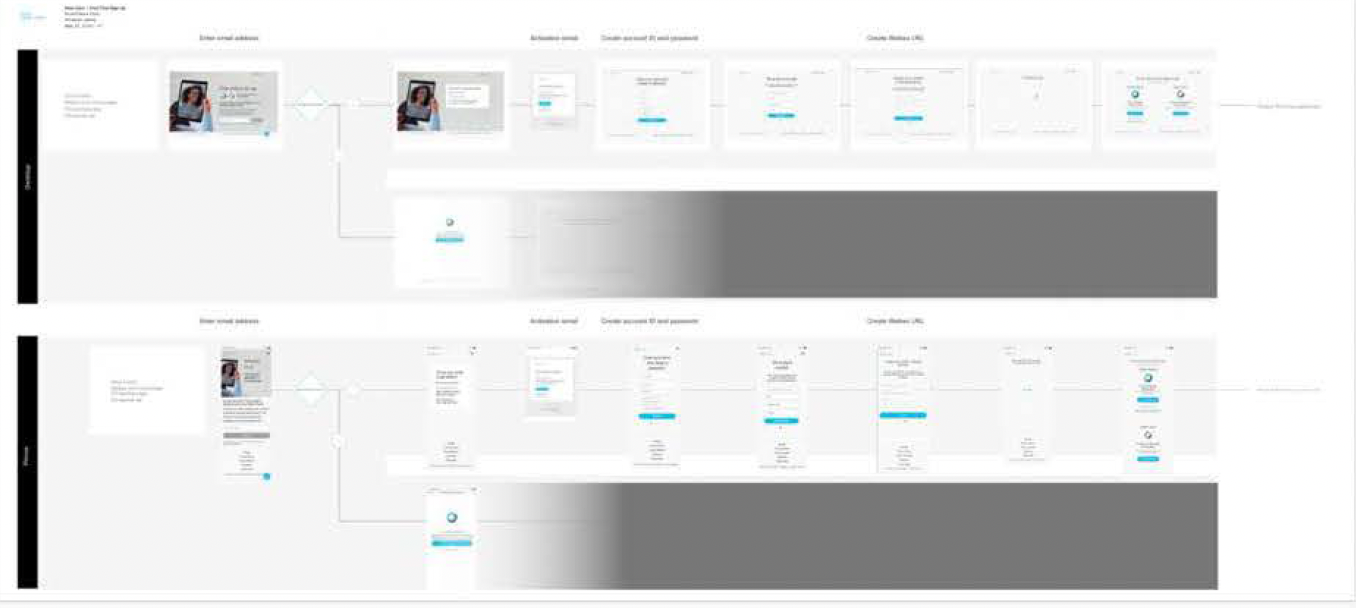
After aligning on the workflow architecture, I structured the design work around two core experiences: the end-user workflow interface and the technical configuration experience.
Research insights from A/B testing and user surveys gave us a clearer understanding of the problem. We combined these insights with earlier competitive analysis and best practice evaluations.
I partnered with the content team to create a vision grounded in both quantitative and qualitative data. We needed a new sign-up model that combined a simpler design with clearer messaging.
Our goal was to reduce friction—especially at the entry point—by designing a landing page with concise, clear content that highlighted features users were actively searching for in an online meeting product.
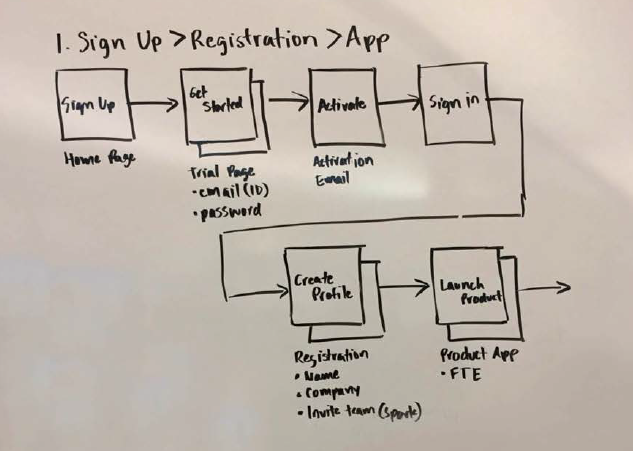
After creating grayscale wireframes and flow concepts, I gathered feedback from internal designers and copywriters and iterated on the concepts. I then led design reviews with stakeholders and decision-makers to align on a final architecture based on defined design criteria.
Design Validation and Fine-Tuning Before Launch
I partnered with a visual designer and provided direction to begin high-fidelity designs. With a tight timeline, we had a limited window to validate usability.
I created a clickable prototype and conducted guerrilla-style usability testing with colleagues who were not part of the project. This allowed us to gather quick, unbiased feedback.
Implement
Launched a Validated Design
The testing validated our new sign-up architecture and provided additional insights to refine interaction and visual design. With strong confidence in the solution, we finalized the design for launch.
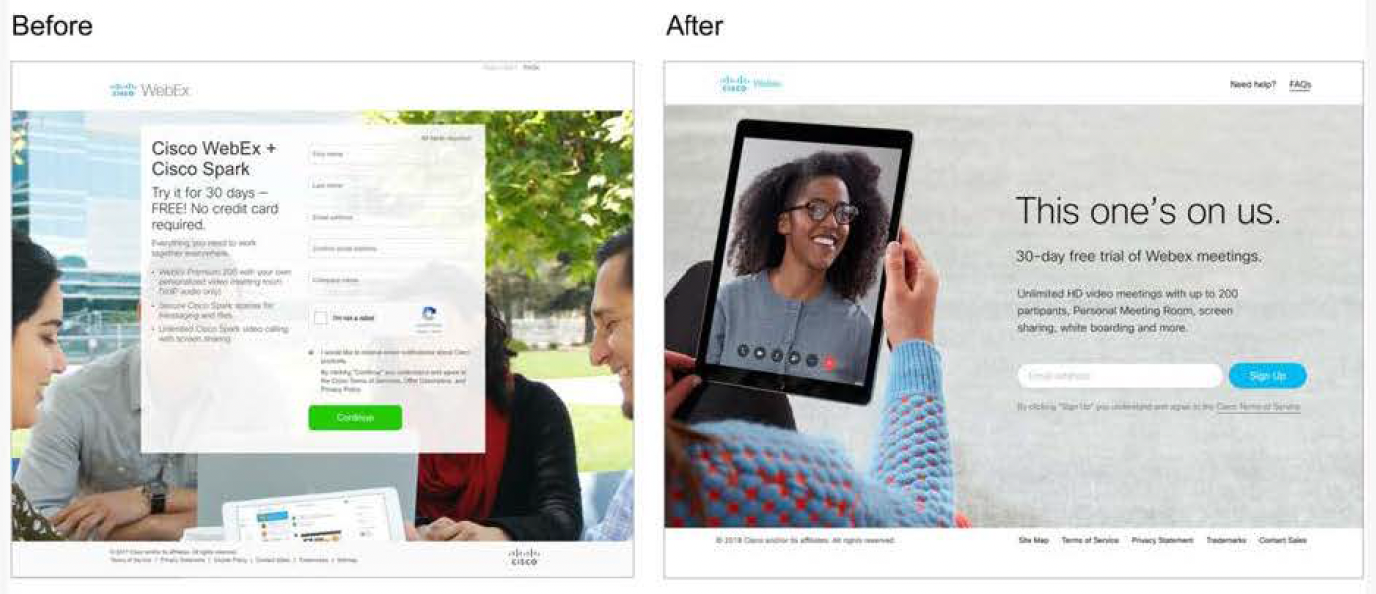
Design Improvements
- Clearer content
- Smoother navigation
- Improved information architecture
- Simplified password creation
Process Highlights
- Identified goals and requirements to launch a redesigned sign-up experience
- Evaluated the existing flow using best practices and competitive analysis
- Advocated for and launched a user poll to validate friction points
- Leveraged quantitative and qualitative data to design and iterate on solutions
- Successfully launched a high-impact product improvement