Workflow Software Tool
Led the design and implementation of a data and AI platform solution for customers to manage data request processes.
IBM Technical Achievement Award
Impact
Customer Problem
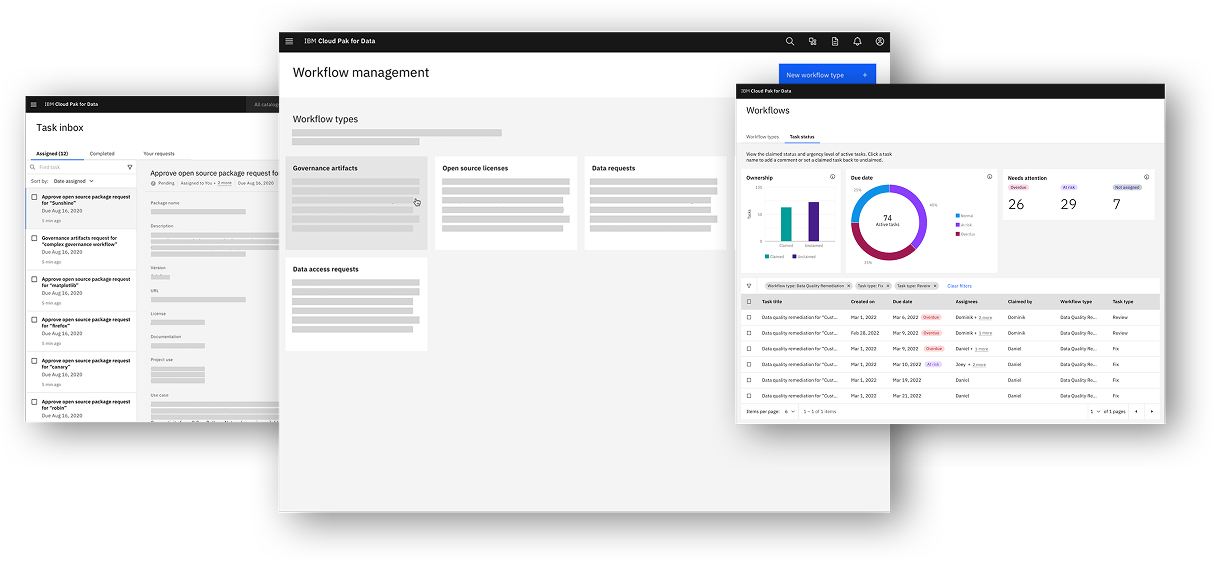
Our objective was to design and deliver a workflow solution that enabled IBM's Data and AI customers to build and manage request processes such as data and custom requests on an existing data management platform.
Design Lead
Led UX Designers, Visual Designer, User Researcher, Product Manager, Architects, Developers
Business Need
Market research revealed a loss of business to competitors offering workflow services. A solution was needed to introduce embedded and custom workflows that would protect IBM’s market share and strengthen its competitive position in data management.
Understand
Conditions & Constraints
The team was newly formed and unfamiliar with both the platform and workflow domain. Ambiguity, technical complexity, and limited shared context created early misalignment.
What was the best and quickest way to build a shared understanding? I directed the team to take a platform user-centered approach by learning from subject matter experts and user research.
Established a Shared Understanding and Direction
Facilitated collaborative working sessions to:
- Build foundational knowledge of workflows and platform capabilities
- Establish a shared language across design, product, and engineering
- Align on key concepts, constraints, and opportunities
These sessions created a unified understanding and language allowing the team to move forward with clarity and direction.
Established Foundation
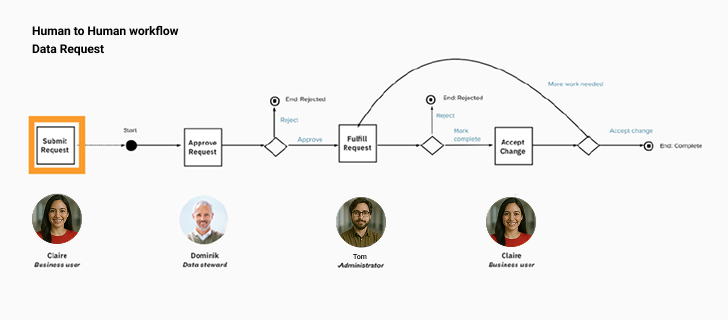
Defining a shared workflow language laid the foundation for alignment, enabling a shift toward designing human-to-human workflows.
Research
Accelerated Shared Understanding
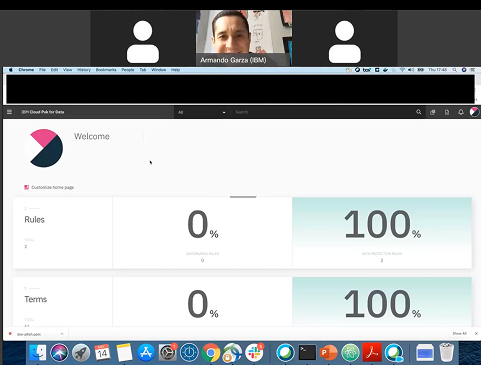
Defined a targeted internal interview strategy by identifying key data scientists and engineers, combining primary insights with existing research to accelerate domain understanding and surface experience gaps and unmet needs.
Research Insights and Highlights
- 30+ user interview hours
- Human to human workflows
- Workflow set up is a main job
- Processes were manual
- LOBs should also manage workflows
- Lack of workflow process visibility
- Up to 12 task steps in a workflow
Established a Mental Model
Research insights accelerated domain fluency and defined a clear mental model of workflow-specific users, creating a strong foundation for strategic design decisions.

Design
Scoping Design and Development
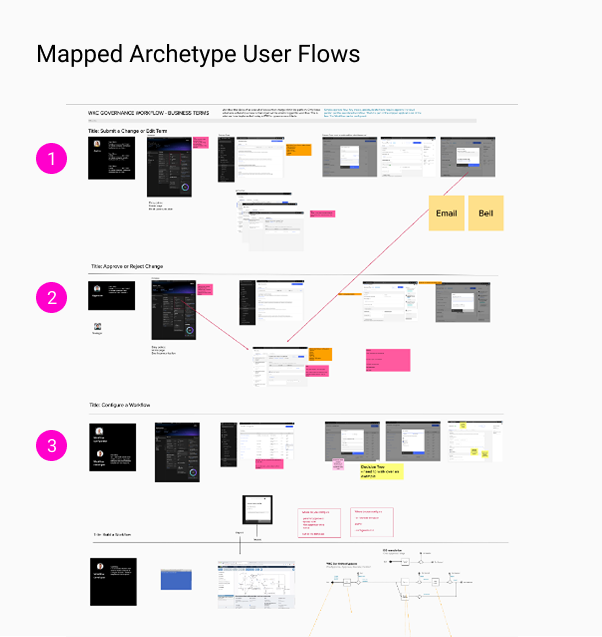
Defined user stories, designed core functional flows, and created service blueprints to identify front-end and back-end capabilities and requirements.
From Ambiguity to Clear Alignment
Led design reviews with Product and Engineering to align on the core workflow architecture. Used system maps to surface and negotiate tradeoffs between technical constraints and user need
Defined Archetype User Stories
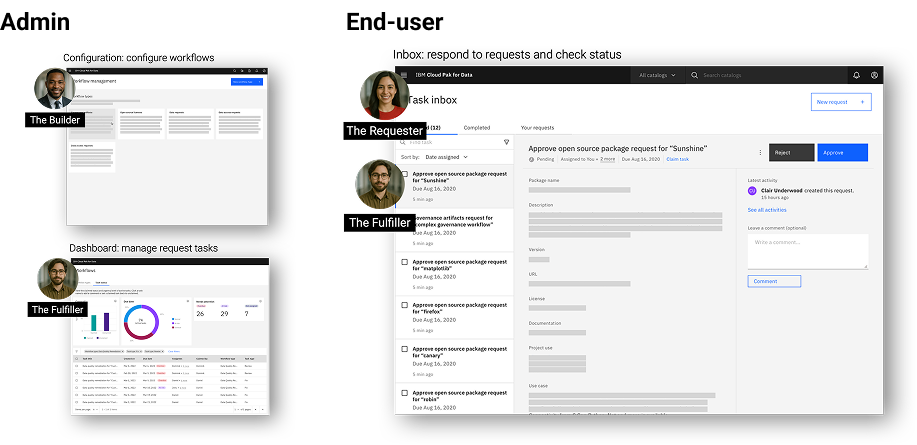
- Requester: Needs to initiate internal requests to obtain, use or manage data.
- Fulfiller: Data owner needs to complete data requests for assets.
- Builder: Needs to configure workflows so that end users can initiate and fulfill requests.
Structuring the Experience Architecture
Defined the overall design approach by deconstructing the workflow system into two core experiences; the end-user workflow interface and the technical configuration layer.
This separation:
- Clarified ownership
- Reduced complexity
- Enabled parallel design
- User-facing and system-level interaction
Driving Cohesion Across the System
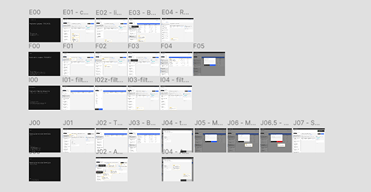
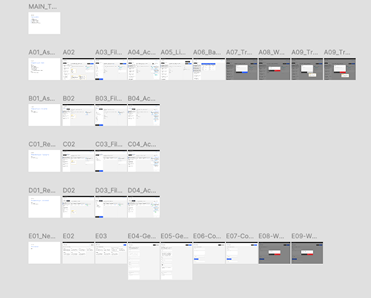
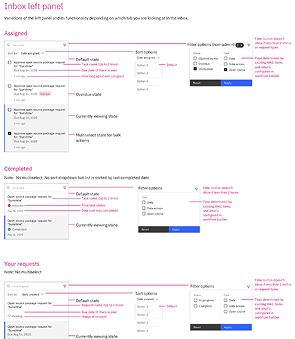
Facilitated regular cross-functional design critiques to ensure alignment across the workflow system and final designs.
Implement
Impactful Results
The result was not just a feature, but an extensible workflow framework embedded into the platform for on premises and SaaS customers.
- Ensured platform consistency and seamless product experience
- Reduced product development and implementation friction
- Strengthened IBM's competitive position as a Data and AI leader
Embedded Workflows in 5 products and services
Monitor and
resolve data
quality violations
Discover, curate,
govern, and share
data
Identify data
inconsistencies,
manage
duplicates
Enable sharing,
discover and
usage of data
products
Customizable
workflows to
manage the
lifecycle of data
Drove Adoption Across Products
IBM Technical Achievement Awardfor Unified Data Quality for Cloud Pak for Data Platform
Delivered a reusable workflow framework that extended the IBM Carbon Design System with new, purpose-built interfaces.
By positioning the framework as a scalable product development service, I enabled teams to rapidly integrate workflow capabilities into their products—significantly accelerating both design and engineering velocity.
Workflow framework building blocks:
- 4 templates
- 8+ patterns
- 4+ components